São Miguel, Azores · A Photographer's Guide
A Photographer's Guide to São Miguel, Azores
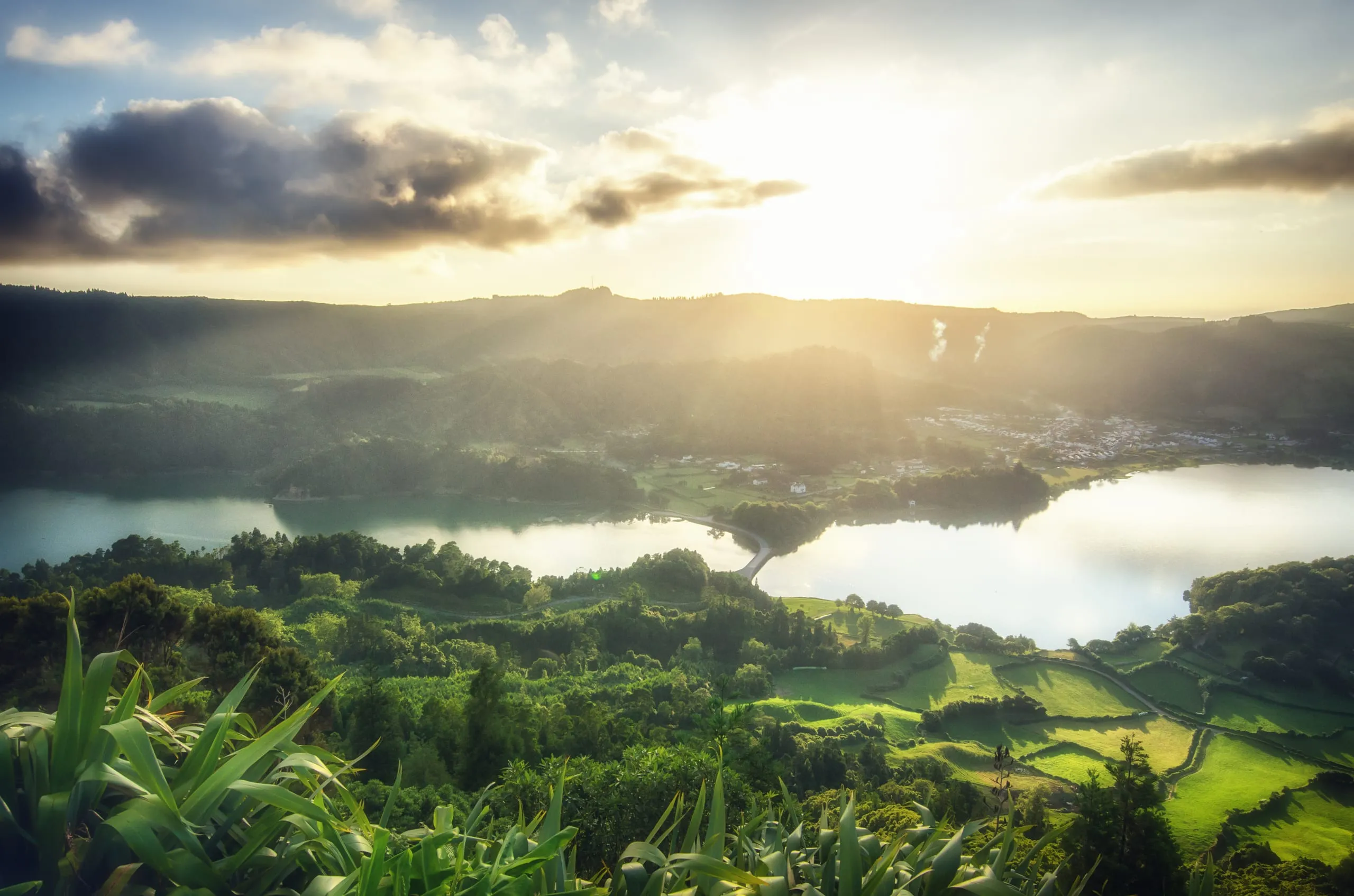
São Miguel is the largest of the nine Azorean islands — a green volcano in the middle of the Atlantic, closer to Lisbon than to anywhere else, where crater lakes sit in old calderas and the roadsides bloom with hydrangeas. These are the parts of the island I kept coming back to with a camera. Everything here is São Miguel, and nothing on it is more than a couple of hours' drive from anything else.
Sete Cidades
The island's signature view. A single enormous crater cradles two lakes — one blue, one green, joined by a low causeway — and the rim above is where every photographer ends up, usually shooting over a hedge of hydrangeas. Up on the ridge, an abandoned hotel has sat empty for decades with arguably the best view on São Miguel.
Furnas & Terra Nostra Garden
Furnas is where the volcano comes closest to the surface — mineral springs steam straight out of the ground and the caldera valley spreads out green below. It's also where lunch is cooked underground: cozido das Furnas, a stew lowered into the volcanic steam vents by the lake before dawn and dug out six or seven hours later. Hot springs are everywhere, and Terra Nostra Garden — palm allées, mossy grottoes, an iron-red thermal pool — is worth an afternoon on its own.
Ponta Delgada
The capital and the island's front door — old-town cobblestones and grill-smoke after dark, and a long tetrapod breakwater with a green harbour light holding back the Atlantic. Come hungry: order lapas — grilled limpets in garlic butter — and the local grass-fed steak, which is some of the best beef I've had.
Gorreana Tea Plantation
On the island's north side, Gorreana is the oldest tea plantation in Europe, its rows combed into the hillside. Not something you expect to photograph this side of Asia.
The Hydrangea Roads
The hydrangeas here are unreal — enormous banks of blue and white that wall the roads for miles. They're the island's signature in summer, and half your best corners are just a bend with a good hedge standing in front of the fog.
The Volcanic Coast
The coast is all black lava and turquoise water. Tidepools glow gold with algae, long exposures turn the surf to smoke, and the cliffs drop straight into the Atlantic.
On the Water — Whales & Dolphins
The Azores are among the best places on earth for whales and dolphins. Spotters watch from the clifftops and radio the boats where the pods are; you pull on a snorkel, slip over the side, and watch dolphins glide beneath you in the open blue. When a pod surfaces, everyone on deck leans the same way at once.
Feast Days & Island Life
São Miguel runs on its summer festas — chapels edged in lights, arches strung over the cobbles, even the prize cow led out for the occasion. Between the feast days it's a working island: pineapples raised under glass, sleeping cats, a food van by the sea. For a small island there's a lot of culture packed in, the people are genuinely warm, and it adds up to one of the more special places I've pointed a camera.
Good to know
- When is the best time to visit São Miguel for photography?
- Late spring through summer (roughly June to August) for the hydrangeas in full bloom and the greenest hills. The trade-off is more cloud, but that soft, moody light suits the island — and the weather turns fast, so a single day often gives you fog, drama, and clear light in turn.
- Do you need a car on São Miguel?
- Yes — rent one. The best frames are the pull-offs between the landmarks, and you'll want to stop on your own schedule. For what the road can't reach, guided tours fill the gaps: whale- and dolphin-watching (and swim-with-dolphins) boats from the harbour, and quad/ATV tours into the hills.
- How many days do you need on São Miguel?
- Three to four days covers the island's main areas without rushing — Sete Cidades, Furnas, Ponta Delgada, the Gorreana tea plantation, and the north and east coast for lava tidepools and cliffs.
- Where are the best spots for landscape photography on São Miguel?
- The Sete Cidades crater rim (and the abandoned Monte Palace hotel viewpoint above it), the Furnas caldera with its steaming springs, the hydrangea-lined roads across the island, and the volcanic coast for long-exposure surf and tidepools.